

 Indonesia
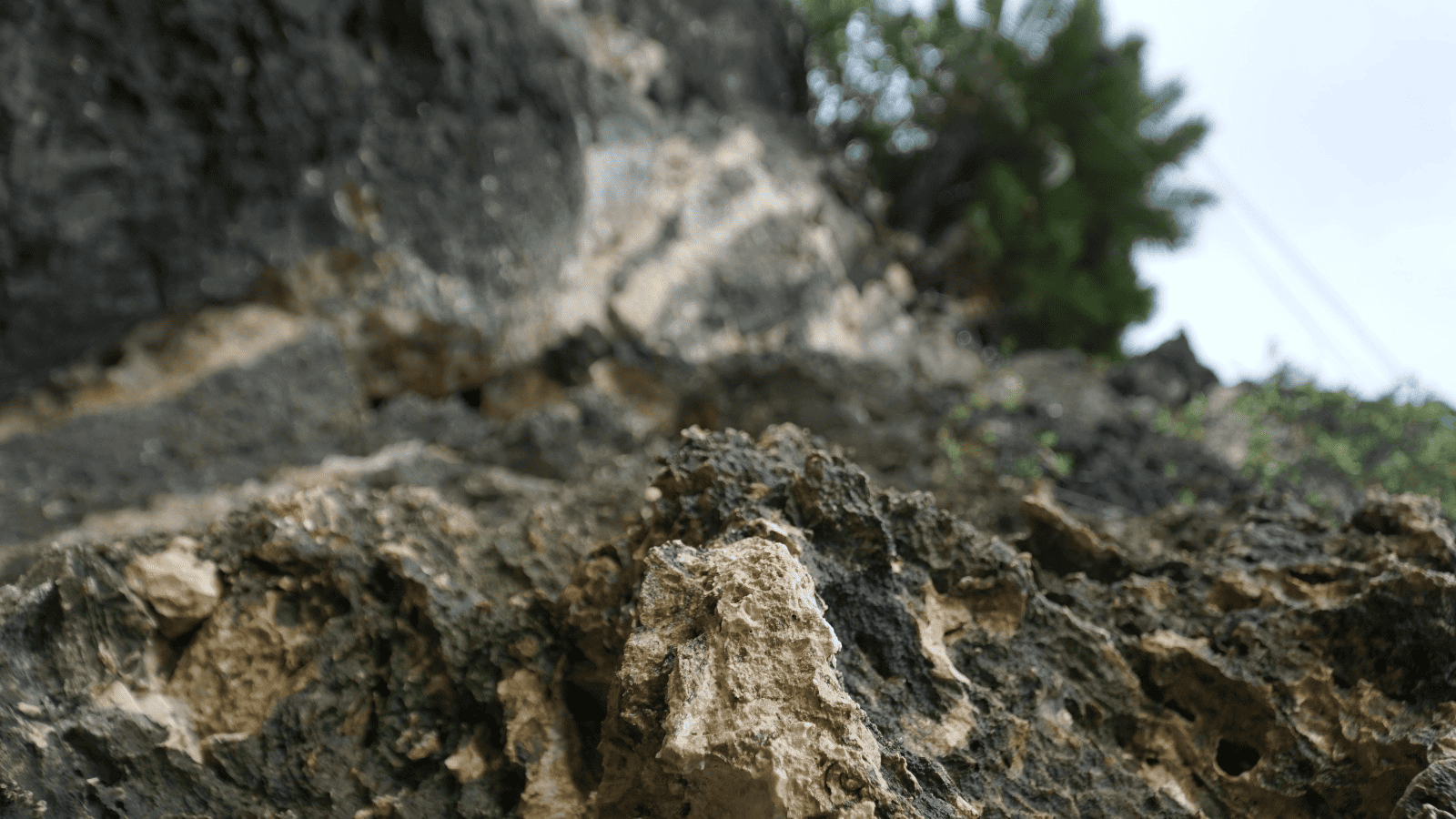
The Olele Limestone geosite, located in Olele Village, Kabila Bone District, Bone Bolango Regency, reveals an important chapter of the region’s geological history through the contact between two rocks of very different ages. Here, Middle to Late Miocene volcanic breccia (15.9–5.3 million years old) is found in contact with Quaternary limestone, which formed less than 2.58 million years ago. The volcanic breccia consists of fragments of various volcanic rocks embedded in a sandy matrix, while the younger limestone is a massive reef limestone dominated by ancient coral reef structures, with layers of calcirudite containing abundant bioclastic fragments.

This contact between the two rock units is controlled by a thrust fault with an orientation of N175°E/57°. Along this fault, the reef limestone was pushed upward, while the volcanic breccia moved downward, providing clear evidence of the tectonic forces that shaped the area after the rocks were formed.

The surrounding landscape is characterized by structural hills with steep slopes that form the dramatic cliffs of Olele Beach. These striking coastal landforms were created by intense faulting, making the site an excellent place to observe how geological structures have influenced both the rocks beneath the surface and the beautiful landscape seen today. The geosite is located in Olele Village, Kabila Bone District, Bone Bolango Regency, at **0°24’41.21” N and 123°9’10.05” E.